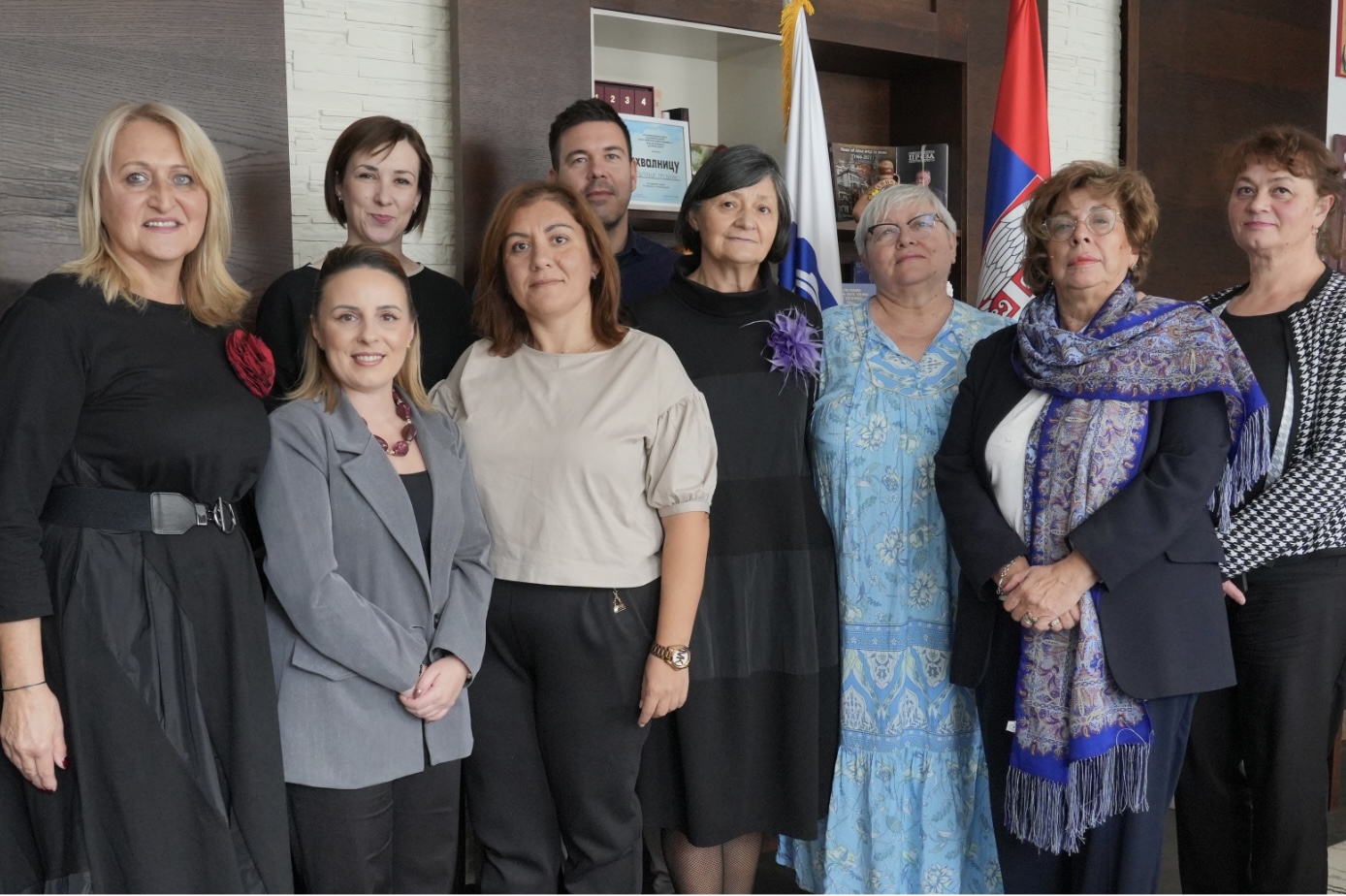
On Friday, 30 October, the first workshop entitled “Faces of Change – A Women’s Vision for Trstenik” was held in Trstenik, bringing together a group of women leaders from this municipality. The workshop was organised to gather the authentic voices, experiences, and real needs of women from Trstenik and translate them into concrete proposals for drafting the Local Action Plan for Gender Equality.
This activity was carried out within the project “From Life to Policy: Strengthening Competences and Mechanisms for Gender-Responsive Local Development and Reducing Gender-Based Violence,” implemented in partnership with the Municipality of Trstenik and with the support of the Cabinet of the Minister without Portfolio in charge of coordinating activities in the area of gender equality, prevention of violence against women, and economic and political empowerment of women. The workshop was opened by Milena Turk, President of the Municipality of Trstenik.
The participants – women leaders from different spheres of social life – led an open and constructive discussion on the deeply rooted challenges women in their community face. Through an analysis of the impact of patriarchal values, they highlighted how imposed gender roles and expectations are passed down across generations. They cited examples of attitudes they had heard from older women in the community such as “you have to swallow it,” “you have to be silent and endure,” alongside messages like “you don’t have to endure as I did,” which point to a complex process of intergenerational transmission of values.
During the workshop the participants shared their experiences of the barriers women in Trstenik, or they themselves, face. Based on the discussion, the following were identified among the key issues that the forthcoming Local Action Plan must address:
- Economic empowerment: Particular emphasis was placed on the problem of “women’s unpaid work” and the need for “support for women in rural areas,” respect for the rights of pregnant women, and direct discrimination in hiring.
- Prevention of and protection from violence: Specific forms of violence that often remain less visible were recognised, such as obstetric violence, digital violence, and sexual violence. The discussion also addressed the need to invest resources in improving the availability of protection from violence and a better system for recognising cases of different forms of violence. The problem of secondary victimisation of victims within the system and the need to develop programmes for working with perpetrators were also highlighted.
- Women’s health: The crucial importance of the availability and regularity of preventive examinations was emphasised, focusing on reducing the prevalence of cervical cancer, breast cancer, and cardiovascular disease, as well as on the availability of mental-health support services.
- Political empowerment: The need for greater participation of women in local-level decision-making was recognised, along with the insufficient visibility of women in leadership positions. Participants stressed that the basis for this must be built systematically and from the earliest age. They also highlighted the importance of mentorship for new women leaders who will be ready to take on responsible positions in public and political life.
- Changing mindsets: The conclusion was that any change must start with a change in the value system and the overcoming of entrenched stereotypes that impose different gender roles on women and men, leading to a less favourable position for women — from the earliest age and across various contexts of personal, family, social, and political life. Beyond the obvious manifestations of unequal power – such as inequality in inheritance or in family decision-making – the value system also influences women’s unequal position by setting different expectations of women and men. Society measures women by whether they have fulfilled themselves as mothers; it expects them to be the pillar of the family – and, despite the time they invest in raising children and caring for older family members, to be successful and independent, strong, gentle, tolerant, empathic, steadfast, responsible… One participant put it in a single short sentence: “You can’t be ill – what would we eat?” Are all these expectations realistic, and what happens if a woman does not meet them?
The problems identified are not isolated; they are symptoms of an outdated value system rooted in patriarchy that no longer matches today’s reality. The participants agreed that women are not asking for privileges but for the fundamental right to the same starting position and equal opportunities as men, the right to equal chances and the freedom to choose their roles without the pressure of tradition. What Trstenik, and society as a whole, needs is to redefine traditional gender roles and to create a new social compact based on partnership, shared responsibility, and equality, rather than on subordination and imposed expectations. It is the responsibility of the entire community to translate this voice into concrete action through the forthcoming Local Action Plan.